 Fiscaloom
Accounts payable is attractive for automation because it combines repeated documents and defined controls. It is also full of material exceptions: supplier changes, duplicates, price variances, tax treatment, missing receipts, and approval thresholds.
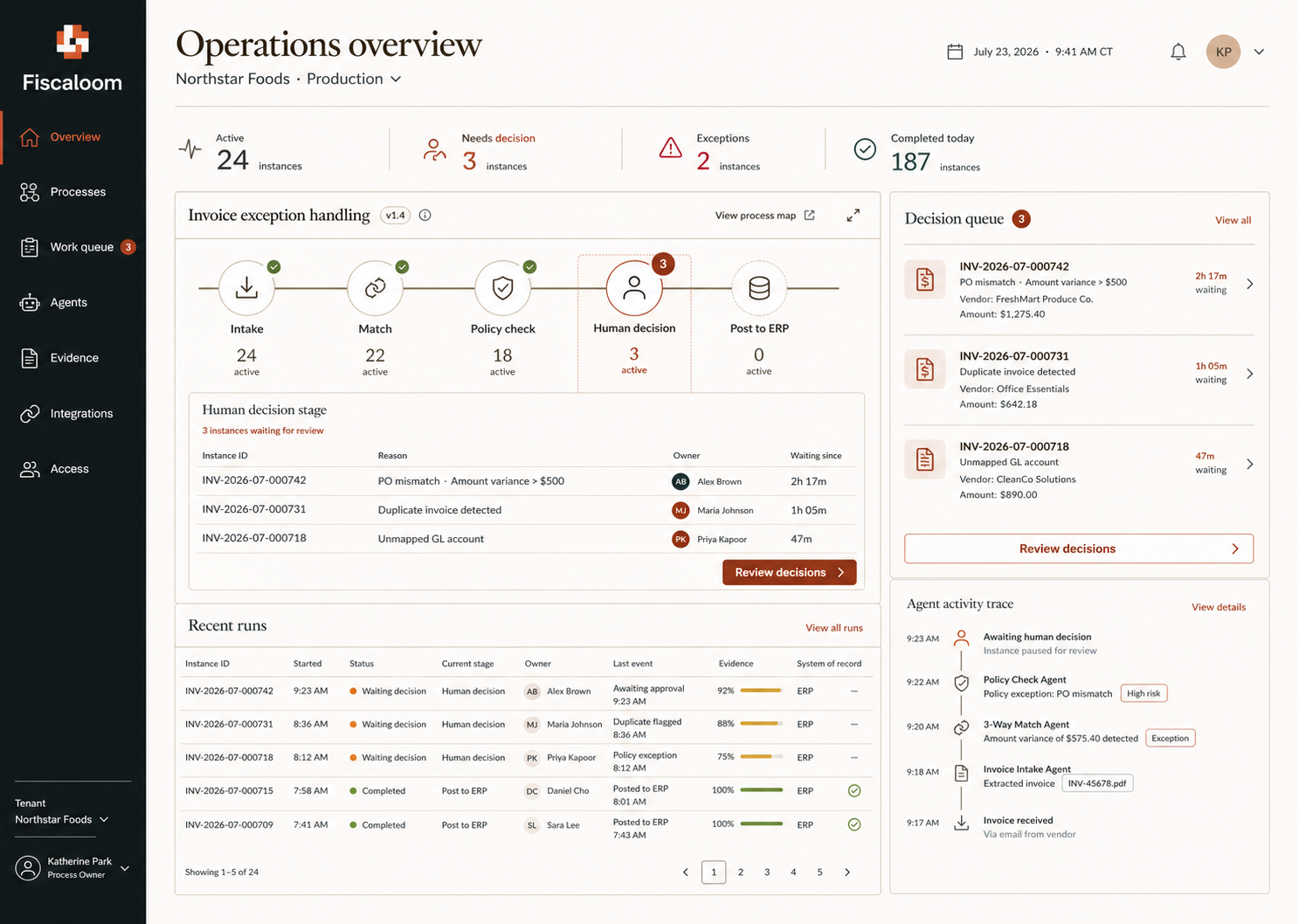
Design the path from receipt to posting preparation
Separate document intake and extraction from validation, matching, coding support, approval, and posting. Name the evidence required at every handoff and the ERP as the owning financial record.
Treat supplier and payment changes as high-risk cases
New bank details, duplicate indicators, unusual amounts, mismatched purchase orders, and policy exceptions should follow explicit verification and approval paths. The workflow should never infer authority from an email alone.
- Duplicate or near-duplicate invoice
- Supplier master-data change
- Missing or closed purchase order
- Price or quantity variance
- Tax or coding uncertainty
- Approval threshold exceeded
Preserve the finance evidence chain
Link source document, extracted fields, validation results, match evidence, human decisions, prepared entry, and final ERP reference. This supports operations, reconciliation, and audit review.
Define AP control points before system action
Confirm supplier identity, invoice uniqueness, purchase-order status, receipt evidence, arithmetic, tax treatment, coding, approval authority, and supplier master-data changes at the appropriate step. Not every invoice uses the same path, so distinguish purchase-order, non-purchase-order, recurring, credit, and exception scenarios.
Keep supplier bank-detail changes outside routine invoice processing unless the approved verification procedure is completed. Separate the person or service that proposes an entry from the authority that approves material exceptions and from the action that posts or releases payment.
Operate AP exceptions as accountable work
Route missing receipts, price or quantity variances, coding uncertainty, duplicate indicators, and closed purchase orders to the role that can resolve them. Show the source document, validation result, match evidence, threshold, and next available decisions. Return supplier or requester questions through approved channels.
Measure exception age and recurrence by cause, supplier, business unit, and process path where appropriate. Use the evidence to improve purchase-order discipline, intake quality, master data, and policy clarity. Do not automatically suppress a control because it creates frequent review.
Further reading
These primary references informed the operating principles in this guide.