 Fiscaloom
A connector name does not prove an implementation is ready. Integration readiness depends on the specific records, actions, permissions, environments, limits, and failure modes the process requires.
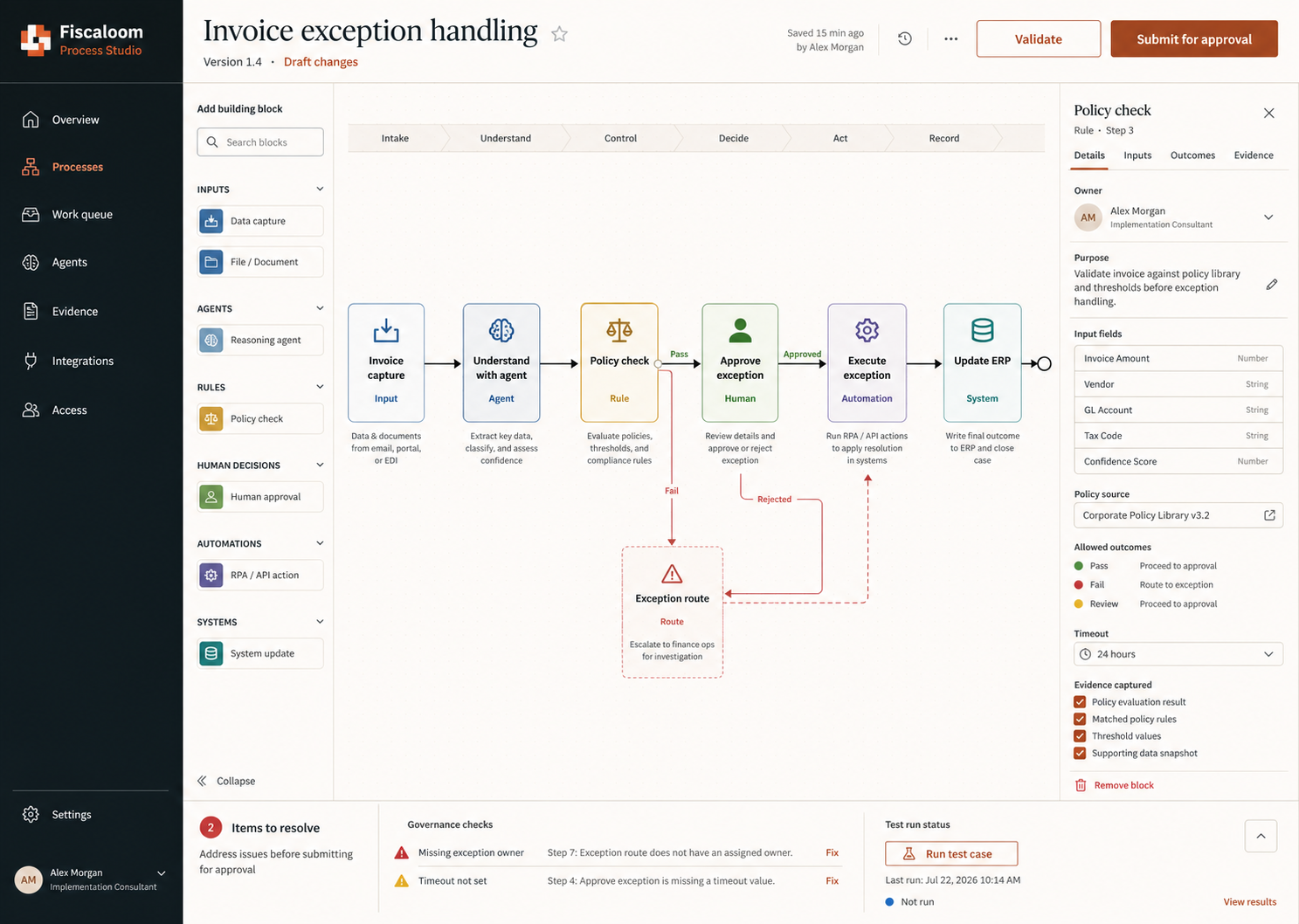
Inventory actions at process level
List the exact reads, searches, creates, updates, attachments, approvals, and status changes. Confirm whether each is supported through an API, event, file transfer, RPA path, or manual handoff.
Confirm non-functional constraints
Review authentication, authorization, rate limits, maintenance windows, sandbox availability, network access, data residency requirements, audit logging, and support ownership.
- Named system owner
- Test environment and representative data
- Credential and permission model
- Expected error responses
- Idempotency or duplicate handling
- Monitoring and support route
Keep unresolved dependencies visible
Record assumptions and owners for open integration issues. A conditional scope is more credible than presenting an unverified connection as ready.
Use a readiness gate before build commitment
Bring process, system, security, data, and delivery owners together to review the exact workflow boundary. Confirm representative cases, decision rules, required system actions, authentication method, test environment, production ownership, and exception routes. Mark each item as verified, conditionally available, or unresolved, with evidence and an owner.
A readiness gate is not intended to eliminate discovery. It identifies which unknowns are normal implementation detail and which could invalidate the proposed scope. If an essential action cannot be tested or an authority remains unclear, fund a bounded investigation or narrow the commitment before agreeing delivery dates.
Manage dependencies as delivery work
Create a dependency plan for credentials, firewall changes, vendor approvals, test data, interface quotas, service accounts, policy decisions, and customer resources. Record lead time, predecessor, owner, evidence of completion, and latest safe date. Review the plan with the same discipline as build tasks.
Retest readiness when an interface, environment, or system owner changes. A previous connection test may not represent production permissions or current error behavior. Preserve the evidence used for the decision so the team can explain why the build proceeded and what conditions still require monitoring.
Further reading
These primary references informed the operating principles in this guide.