 Fiscaloom
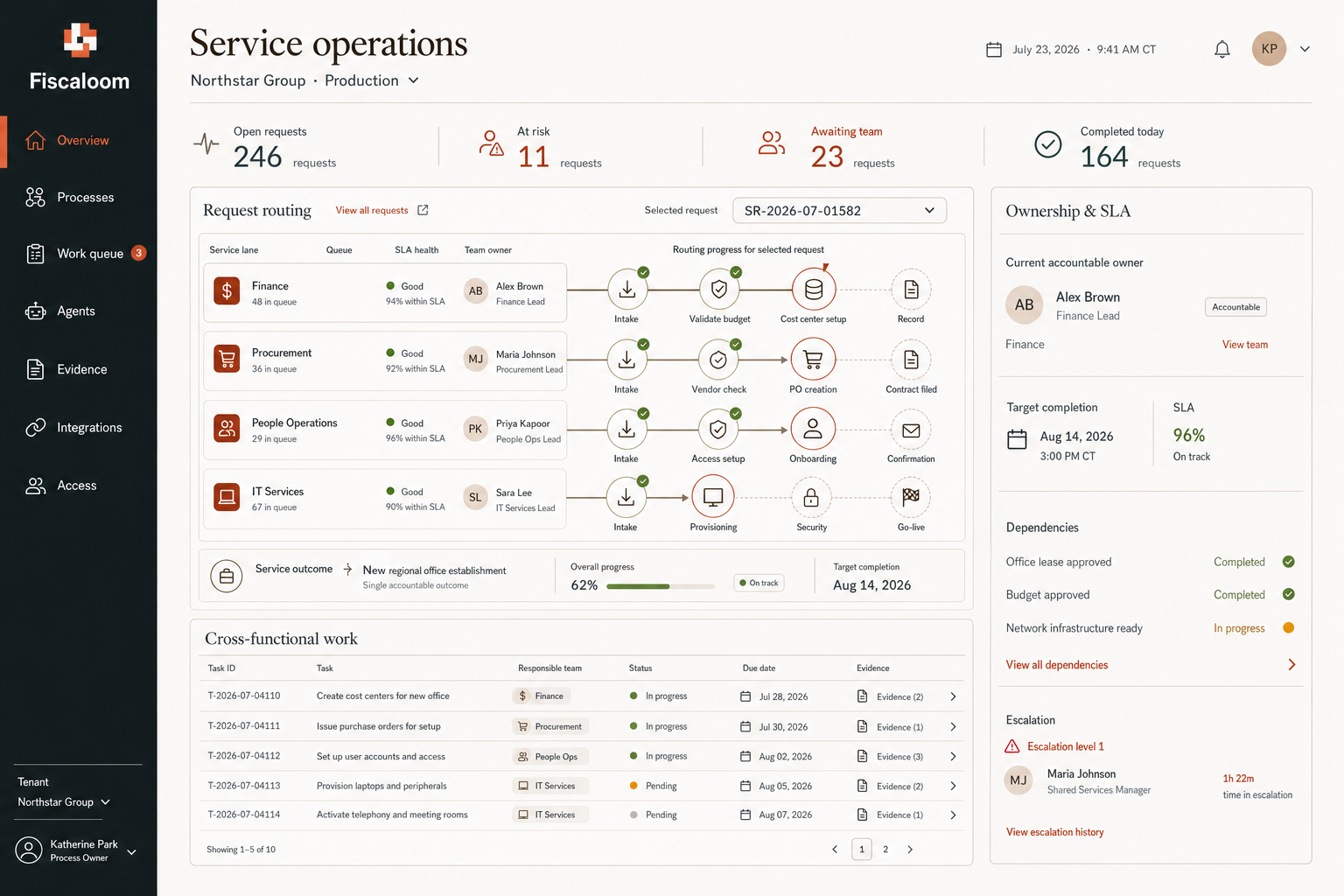
Shared-services operations receive diverse requests that rarely fit one straight-through path. The routing model must be consistent enough to operate at scale and flexible enough to preserve specialist judgment.
Build a service taxonomy that supports action
Categories should determine an owner, required context, priority, fulfillment path, and expected record—not merely produce reporting labels. Keep the taxonomy maintainable and provide an explicit route for unclear requests.
Coordinate work without obscuring accountability
A request may require finance, procurement, HR, IT, or a local team. The workflow can coordinate tasks, but one role should remain accountable for the service outcome and customer communication.
Use routing evidence to improve service design
Review misroutes, reassignment, missing information, wait states, repeat contact, and unresolved exceptions. These signals show where forms, policies, ownership, or integration need attention.
Govern the service taxonomy as an operating asset
Each category should have a definition, examples, exclusions, required context, owner, priority rule, and destination. Avoid categories created only for reporting if they do not change handling. Provide a controlled “unclear” route and review those cases to improve the taxonomy.
Assign a taxonomy owner and a change process. New categories can fragment queues and reporting; overly broad categories can conceal specialist work. Test changes against historical requests and update forms, routing, service documentation, and measures together.
Preserve one accountable service outcome
When fulfillment crosses finance, procurement, HR, IT, or local teams, create linked tasks but keep one role accountable for status and requester communication. Define handoff acceptance so a team cannot silently pass incomplete work to the next queue.
Measure wait time between teams, reassignment, repeat contact, missing information, and cases without a clear owner. These measures reveal organizational friction that a routing model cannot solve alone. Escalate structural ownership gaps to the service governance forum.
Further reading
These primary references informed the operating principles in this guide.